SPX-MicroCFKnow when to speak. Know when to listen.
#1 in interruption recall. #3 in end-of-turn recall on TurnBench ↗.
From detecting speech to knowing when to respond.

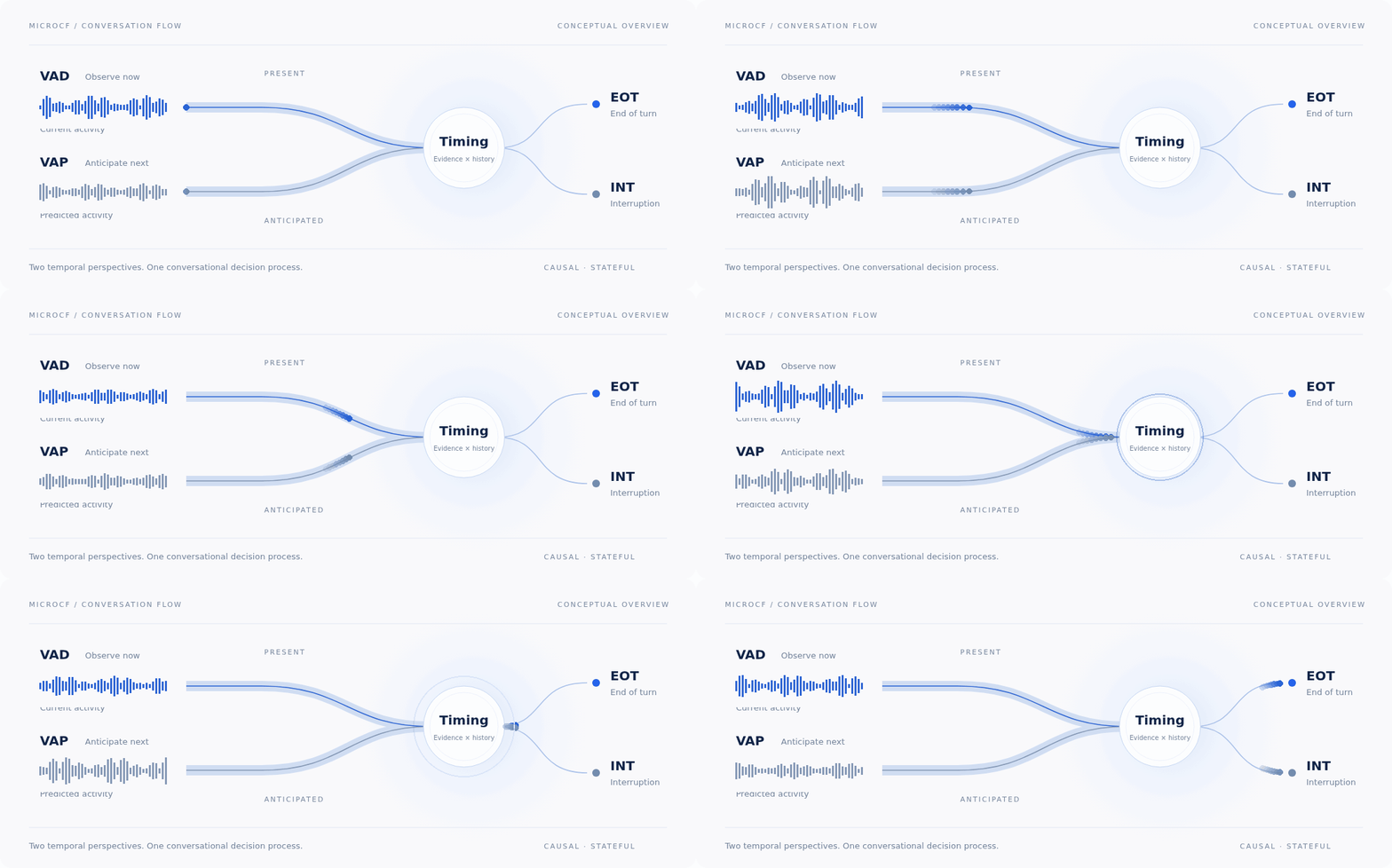
On the official held-out TurnBench test set, MicroCF ranks first in interruption recall at 98.4% and third in end-of-turn recall at 90.6%. By combining current speech activity with predictions of future activity, it provides timing signals that voice applications can use to respond, wait, or yield the floor.
Observe the present.
Anticipate what follows.
A pause can end a sentence—or simply mark a breath. Acoustic activity describes what is happening now. Conversational decisions also need evidence about what may happen next.
VAD · Current activity
Extracts speech-activity evidence from audio, grounding observations of speech and silence.
VAP · Future activity
Uses the conversation observed so far to predict subsequent activity, providing context for continuation and speaker transitions.
The two views are complementary. Predictions use only audio already observed; they provide evidence for a decision, rather than constituting an end-of-turn or interruption event themselves.
Decisions with
temporal continuity.
The same brief pause can mean different things mid-sentence and at its end. MicroCF interprets observations within the ongoing conversation: current evidence and historical state jointly inform the next decision, rather than turning every transient change into an event.
Know when to speak.
Know when to yield.
EOT asks whether the current turn has ended; INT asks whether another speaker is taking the floor. Both use activity evidence, but their errors carry different costs: responding too early cuts a speaker off, while yielding too late makes it harder for a user to redirect the conversation.
MicroCF treats these as distinct timing decisions, balancing detection coverage, false triggers, and waiting time for each task.
Leading results.
Public evidence.
MicroCF achieves leading results on both core TurnBench tasks: first in interruption recall and third in end-of-turn recall. We report recall, false-positive rate, and detection latency together so the results—and their trade-offs—can be assessed.
FPR 7.3% · Median detection latency 747 ms
FPR 7.9% · Median detection latency 678 ms
Source: Official TurnBench test results ↗. Rankings are based on held-out test recall, checked September 23, 2026. Original-site screenshots are dated September 22, 2026. Detection latency is not full application end-to-end response time.
The horizontal axis shows FPR and the vertical axis shows recall; upper-left is better. EOT and INT are shown separately. Rankings in this chart use recall at FPR ≤ 15%.
Original image source ↗These data include tuning examples; the rankings are not official test rankings. MicroCF uses causal audio timestamps, excluding compute and network time; other systems use public prediction timestamps. Delay comparisons therefore use different timing conventions.
Original image source ↗The original performance screenshot is preserved. Refer to TurnBench for live results.
Original image source ↗The original leaderboard screenshot preserves the rankings and metrics shown at the time.
Original image source ↗Speaking and listening, in context.
MicroCF provides conversational timing signals. Applications combine them with playback state and task context to decide when to respond, wait, or yield.
Explore the public evaluation ↗