RESEARCH / MULTIMODAL MEMORY
Simplex VM0First-person experience for understanding and decisions.
A memory foundation for spatial intelligence.
Evaluated on EgoLifeQA, ATM-Bench and Mem-Gallery. Three settings examine different dimensions of long-term memory.
01 / EXPERIENCE
02 / MEMORY
Experience across time
03 / RETRIEVAL
Context for understanding and decisions
Remembering beyond the current turn.
Simplex VM0 explores multimodal long-term memory for robots. It combines textual and multimodal records so that past first-person experience can inform present understanding, spatial context and decisions. This research direction brings together LDM (Lifelong Developmental Memory) and HTDM (Hierarchical Temporal Developmental Memory).
01 / EVALUATION
Evidence across three memory settings.
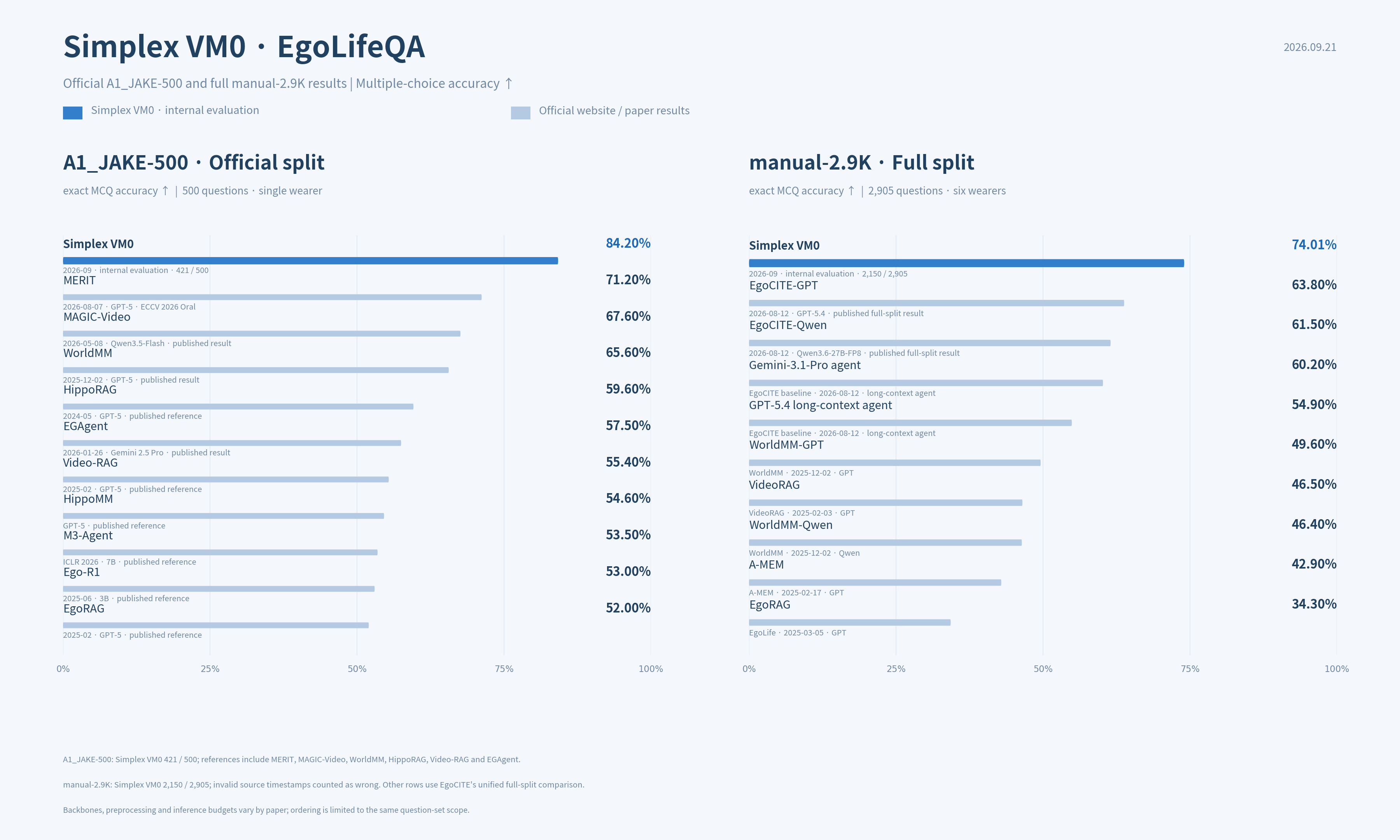
EgoLifeQA
Questions about events, people and temporal relationships in first-person daily-life records.
84.20% A1_JAKE-500/ 74.01% manual-2.9K
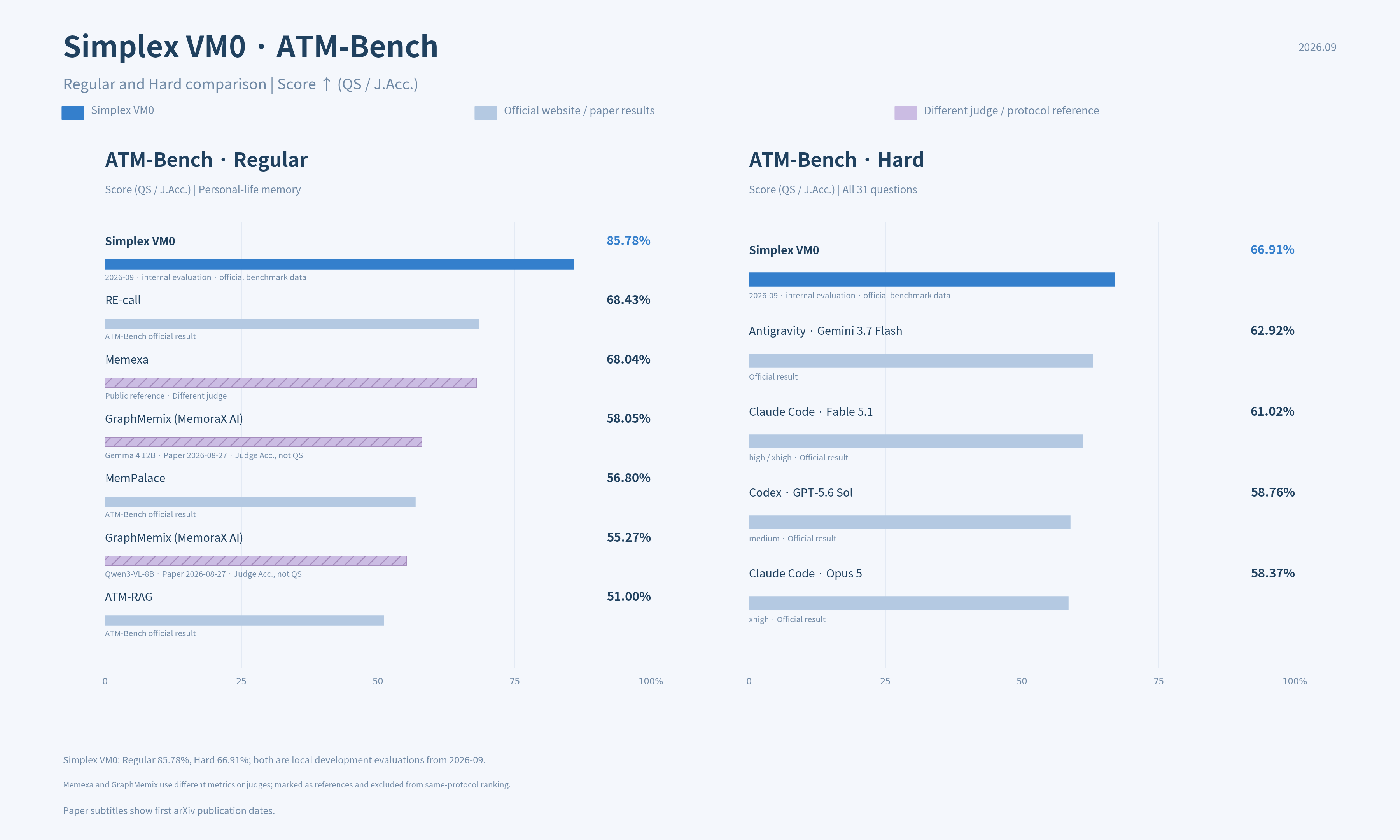
ATM-Bench
Retrieval and reasoning across personal memories from images, videos and email.
85.78% regular QS/ 66.91% Hard QS
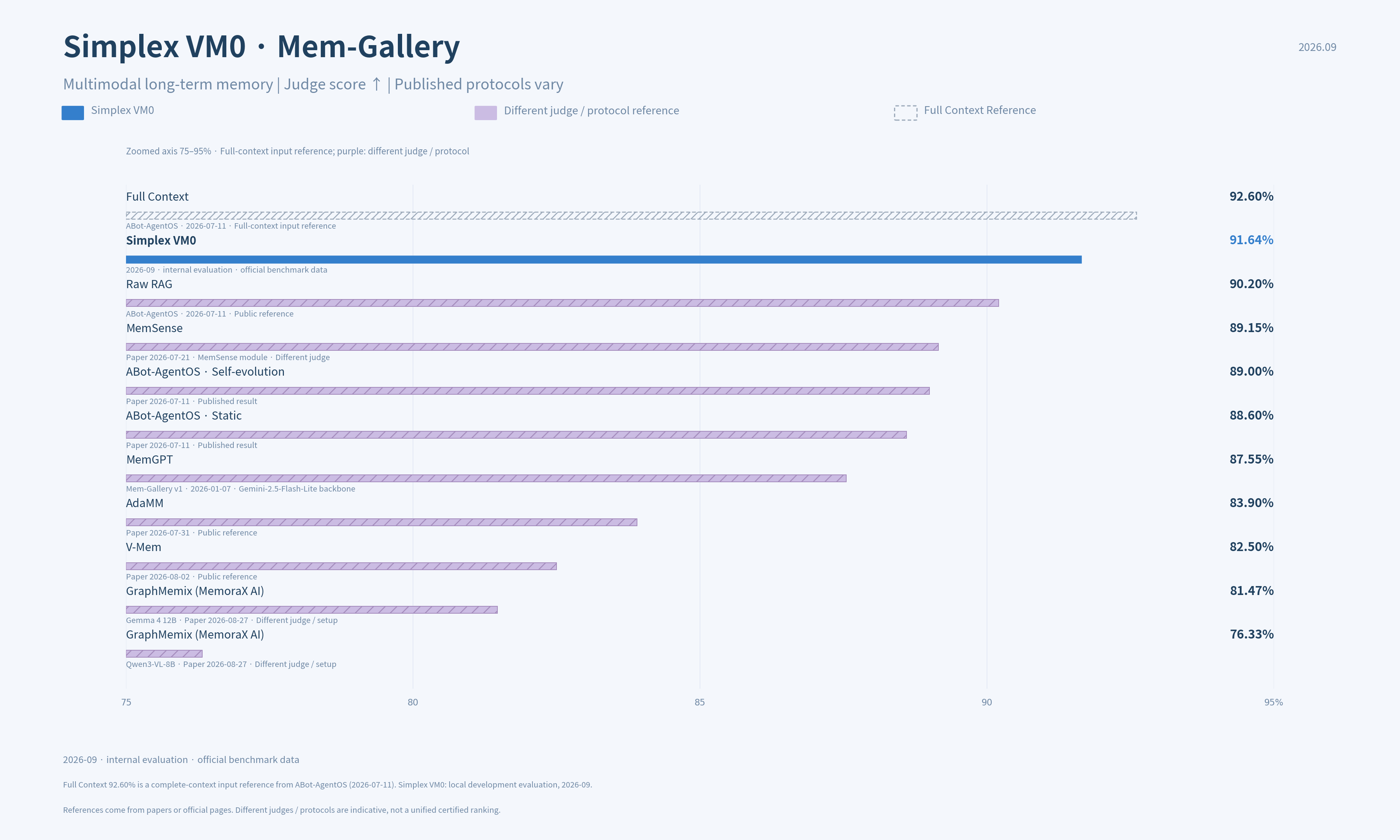
Mem-Gallery
Recovering textual and visual details from long-running multimodal conversations.
91.64% normalized mean judge score